
Tucker Carlson’s interview with Mike Benz is fascinating for a number of reasons. But perhaps chiefly among these, it more or less supports something that Vox Day has been arguing for some time: that “free speech” is not some civic virtue used to elevate discussion and illumination in a free society, but is rather a weapon used to tear down existing structures:
…free speech on the internet was an instrument of statecraft almost from the outset of the privatization of the internet in 1991. We quickly discovered through the efforts of the defense department and our intelligence services that people were using the internet to congregate on blogs and forums, and free speech was championed, more than anybody, by the Pentagon, the State Department, and our, sort of, CIA-cutout NGO blob architecture, as a way to support dissident groups around the world in order to help them overthrow authoritarian governments — as they were sort of billed. Essentially, internet free speech allowed kind of insta-regime change operations, to be able to facilitate the foreign policy establishment’s State Department agenda.
Google is a great example of this. Google began as a DARPA grant by Larry Page and Sergey Brin when they were Stanford PhDs, and they got their funding as part of a joint CIA/NSA program to chart how “birds of a feather flock together” online through search engine aggregation. And then one year later they launched Google, and then became a military contractor quickly thereafter — they got Google Maps by purchasing CIA satellite software, essentially…

It goes without saying that these organizations which promote free speech will — almost without exception — change their tune once they are in any kind of position of power, and find the possibility of free speech directed at themselves. The ostensible subject of Tucker Carlson’s interview is censorship of American citizens by our own government; if one begins with the assumption that free speech is not some gift and privilege, but a weapon, it would make sense that the state would want free speech for countries around the world they don’t necessarily like, but not want it here in our own country, for our own citizens.
But as damning as this sounds, I don’t think this is necessarily some knock-down argument against the First Amendment. Rather, I think it highlights the importance of making an important distinction: namely, the right of freedom of expression, and the right to anonymity.
Much of the ethos of internet freedom actually focuses more on the latter than on the former: it is not enough that we should be able to say what we think, but that we should be able to do so without being known or identified. Indeed, the hacker collective that emerged from 4chan in 2003 calls itself “Anonymous,” and more or less speaks on behalf of this internet ethos in championing not only freedom of information, but also privacy.
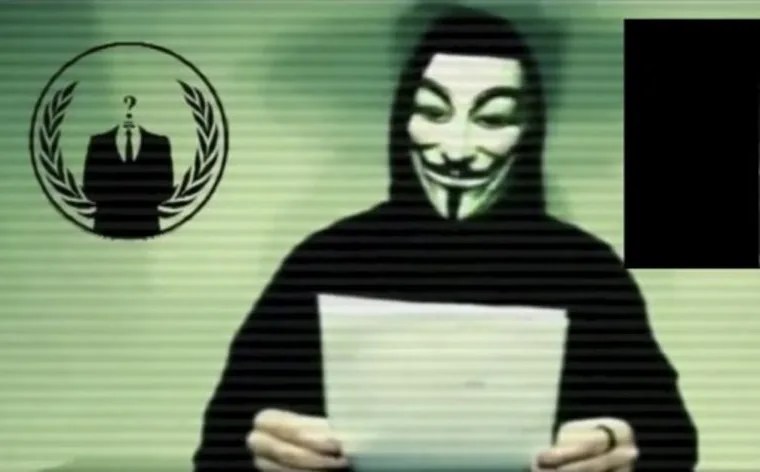
Within this internet ethos, the right to privacy and the right to information and to free speech are in some sense connected.
Now, I think there is a strong case to be made for privacy, even a right to privacy… but this becomes troublesome when combined with the desire to speak directly about public matters. It runs directly into conflict with another important right, which is the right to face one’s accusers. One cannot speak openly and frankly and anonymously if the things you wish to say implicate others — even public figures. The importance of being “confronted with the witnesses against us” has always been important because statements can be immensely destructive to a person’s reputation, and rumors did not begin with the internet. Whatever value there may be in free speech would be completely overwhelmed by the cost of unfettered criticism, lies, and propaganda, untethered to any cost for perpetrating such crimes against the good faith of the public.
The internet did not change this dynamic. Whatever right to anonymity which might exist necessarily ends at the beginning of political speech — otherwise, the right to face one’s accusers in the broader spirit of symmetry is lost. Within a representative government, the state represents us. This does not mean that all of our individual actions should be scrutinized as though they were performed by the state (which does not possess individual rights, like those of privacy or free expression), but it does mean that when individual citizens engage in political acts — such as voting, or organized activism — there must be a shift in standards… just as when a citizen becomes a “public figure,” they lose a certain degree of their right to privacy.
The right to free speech and the right to anonymity are mutually exclusive… which is not to say that we cannot enjoy and exercise both rights, but that we cannot exercise both rights at the same time without damaging the balance of responsibility that makes free speech a workable feature of a free society, and not merely a tool for state agencies to manipulate public sentiment.
We could, of course, re-frame the whole conversation without “rights” too: free speech aids in the development and testing of ideas. However the abuse of speech (which is sometimes protected) can make life intolerable for the people who just want to live their lives; an expectation of a certain degree of privacy is necessary to make free speech tolerable. Yet if people do decide to speak up, a right to know the speaker (expressed in law as an obligation to show your face when making an allegation) protects against corruption and malicious abuse of the law and of various other media. You can’t have absolute expressions of all three ideals without paving the way for abuse, corruption, or intolerable nastiness.
In fact, the conflict between free speech, privacy, and the right to face one’s accuser is so obvious, one wonders how they ever came to be grouped together in the first place…
As an aside, ever wonder how many CIA assets have contributed to 4chan? and for how long?
If Benz is correct, and that the promotion of free speech on the internet was an “instrument of statecraft,” then free speech must have been grouped with an idealization of anonymity or else the desired influence would have lost a great deal of its effectiveness.
Imagine if the CIA had a YouTube channel. Who would watch it?
Actually, as it turns out, the CIA does have a YouTube channel, boasting 78,000 subscribers. By contrast, Boxxy has 371,000 subscribers (despite not having uploaded in 10 years), and the White House has over 2 million. The CIA may as well write books that argue their position in order to persuade.
I kid. That’s not how intelligence influence works. They require indirect methods, which are greatly advanced when anonymity is championed as a patriotic, or even supra-patriotic value. We take pride in not committing ad hominems, and if we are feeling particularly trollish, we might even channel the sophist Thracymachus, when accused of poor faith:
I may be in earnest or not, but what is that to you? –to refute the argument is your business.
Of course, who is making the argument does matter, because logical argumentation is not the only language game in town. An allegation whispered and spread tens of thousands of times by hundreds of actors circumvents the rules of logical precision in the minds of the audience (who may or may not be logically trained anyhow). Repetition and emotionality can — and do — persuade, completely apart from logic.
The last 8 years have been a deep-end swimming lesson for many on this point.
Within this context, the claim that critics who care about the identity of actors are asking for something unreasonable — or are even committing a logical fallacy — is right on the edge of outright gaslighting. At the very least, they are zombie-actors for intelligence influence operations. This may happen to serve the precise foreign policy purposes of the CIA (or the SVR or Chinese State Department), but it doesn’t work toward that balance that helps maintain a functioning society, or even the kind of mental tools of thought necessary to be a functioning, thinking individual — in civic terms or in more private contexts.
Perhaps we could have figured all this out in the age of typewriters, but I think the internet has accelerated the necessity of addressing this conflict. The history of the state’s involvement in the internet generally, and with the promotion of “free speech” abroad (in the sorts of places where color revolutions happened) seems to make the matter something urgent. This, not only to separate the malicious abuse of the concept from the good parts of free speech — like the prohibitions on prior restraint and compelled speech — but maybe to save our very society from the tunnel-vision of governmental bureaucracies.

